Conveying Systems
Conveyor Rollers & Idlers
Conveyor rollers (idlers) are the rotating components that carry and guide the belt through every stage of a conveyor. The four types below share the same construction — a balanced steel tube, a fixed shaft and sealed deep-groove bearings — and differ mainly in where they work on the conveyor and the load they are built to take.
All types are manufactured to standard dimensions or to OEM drawings, and are interchangeable with the frames of all major conveyor systems.
Specifications
| Tube diameter | Φ63.5 – 219 mm |
| Belt width | 400 – 2,400 mm |
| Shaft diameter | 20 – 40 mm |
| Bearings | 6204 – 6310 deep-groove, 2RS / C3 |
| Sealing | Multi-stage labyrinth + rubber seal, greased for life |
| Tube options | Steel, HDPE or rubber-coated; custom lengths to drawings |
Product Types
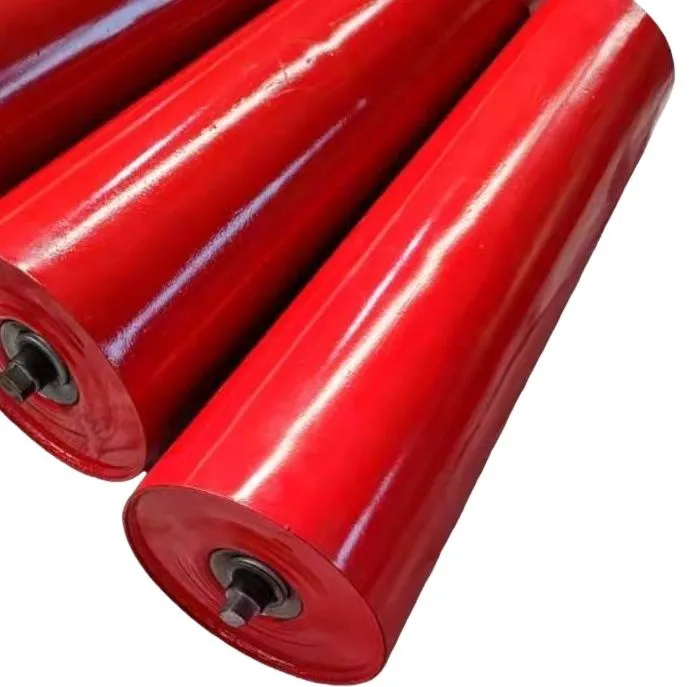
Carrying Rollers
Carrying rollers support the loaded side of the belt, usually installed as 3-roll troughing sets at 20°, 35° or 45°. They take the full material load, so tube straightness, balance and bearing quality decide belt stability and power consumption.
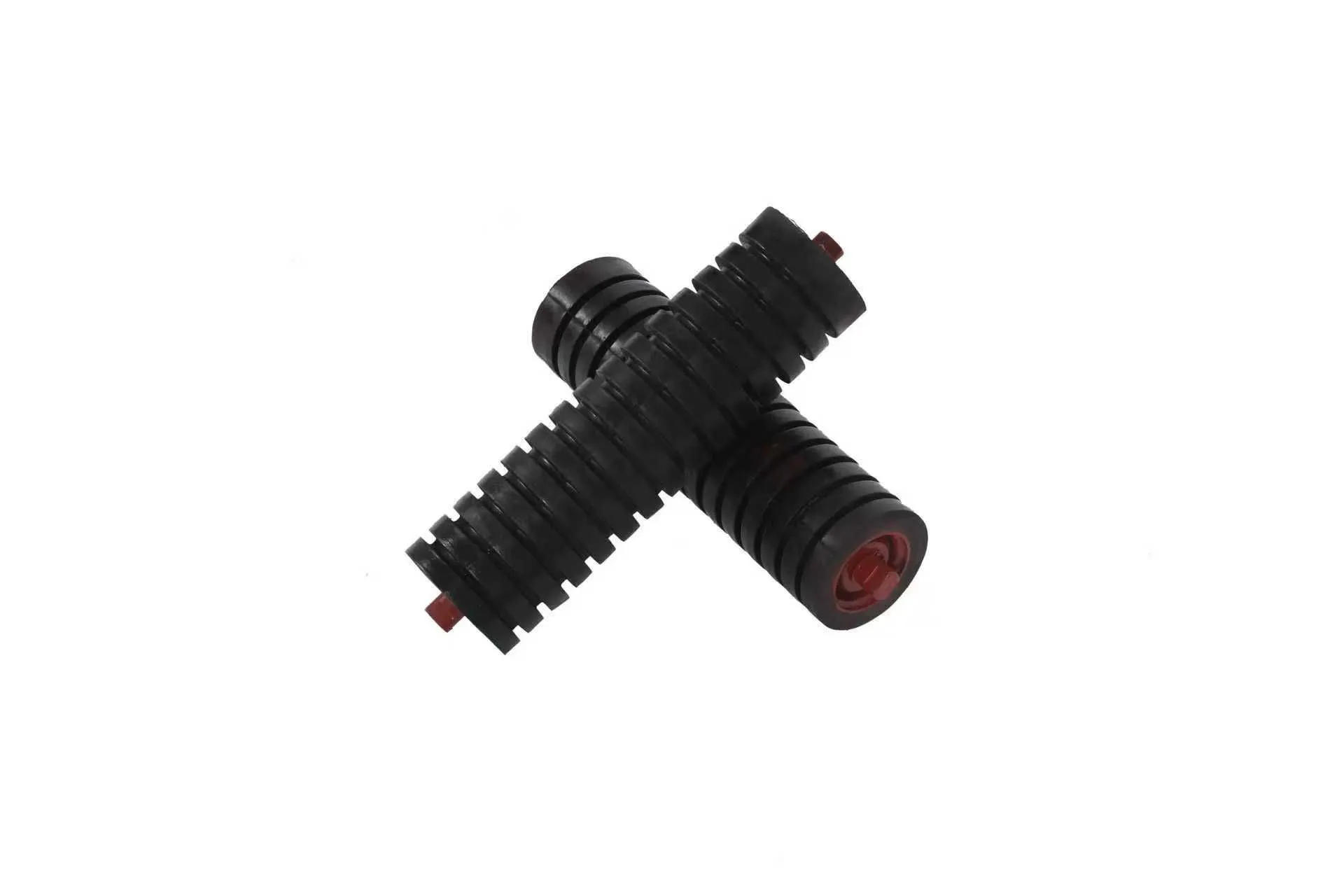
Guide Rollers
Guide rollers are mounted vertically at the belt edge to correct belt wandering and protect the edge from abrasion. They are used on both the carrying and return side wherever tracking problems occur.
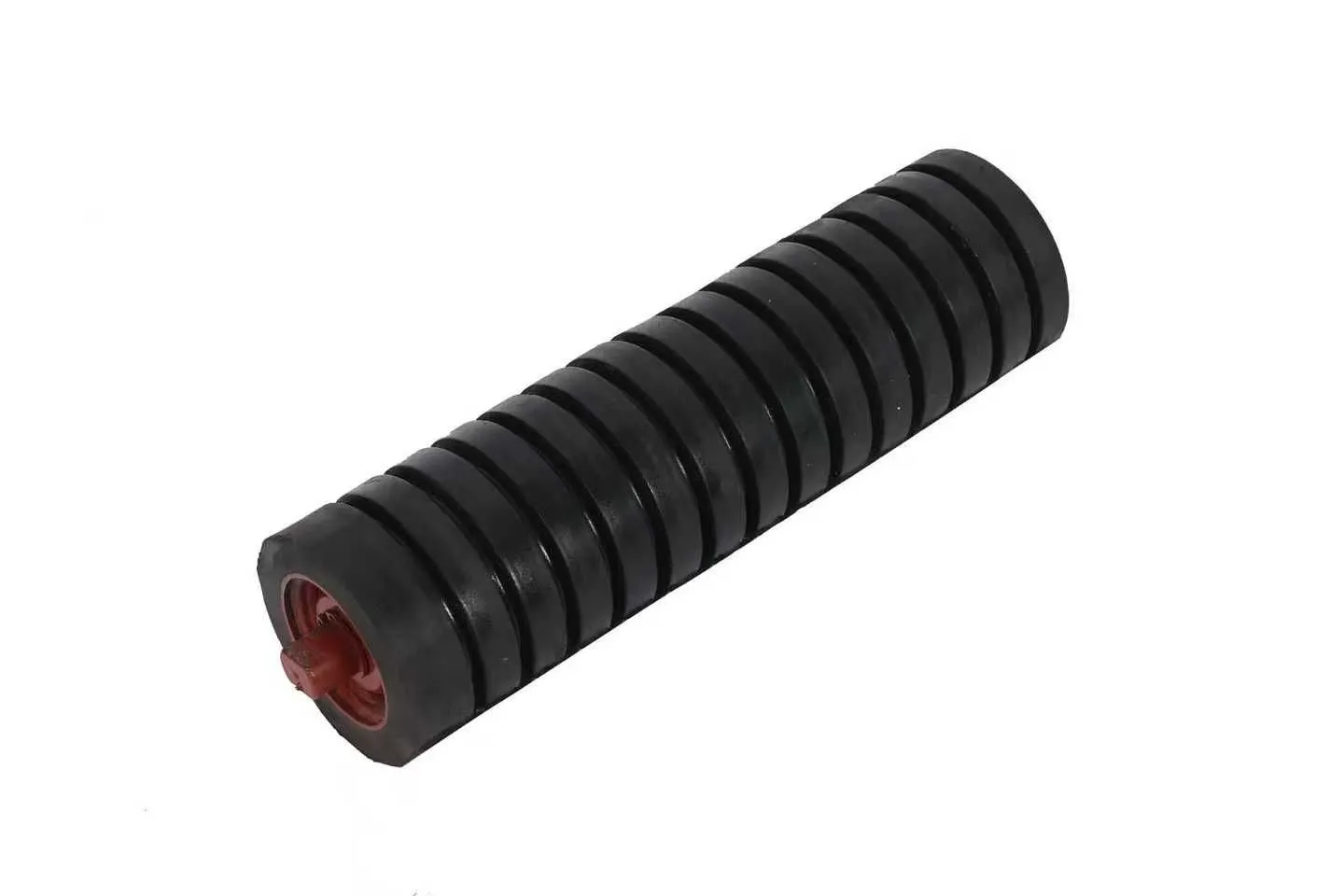
Impact Rollers
Impact rollers are installed under loading points and transfer chutes, where falling material hits the belt hardest. Resilient rubber rings over the steel tube absorb the impact energy, protecting the belt cover, the bearings and the conveyor structure.
Because they work in the highest-load position, impact rollers are usually the first rollers to need replacement — ring condition and bearing state should be part of every inspection round.
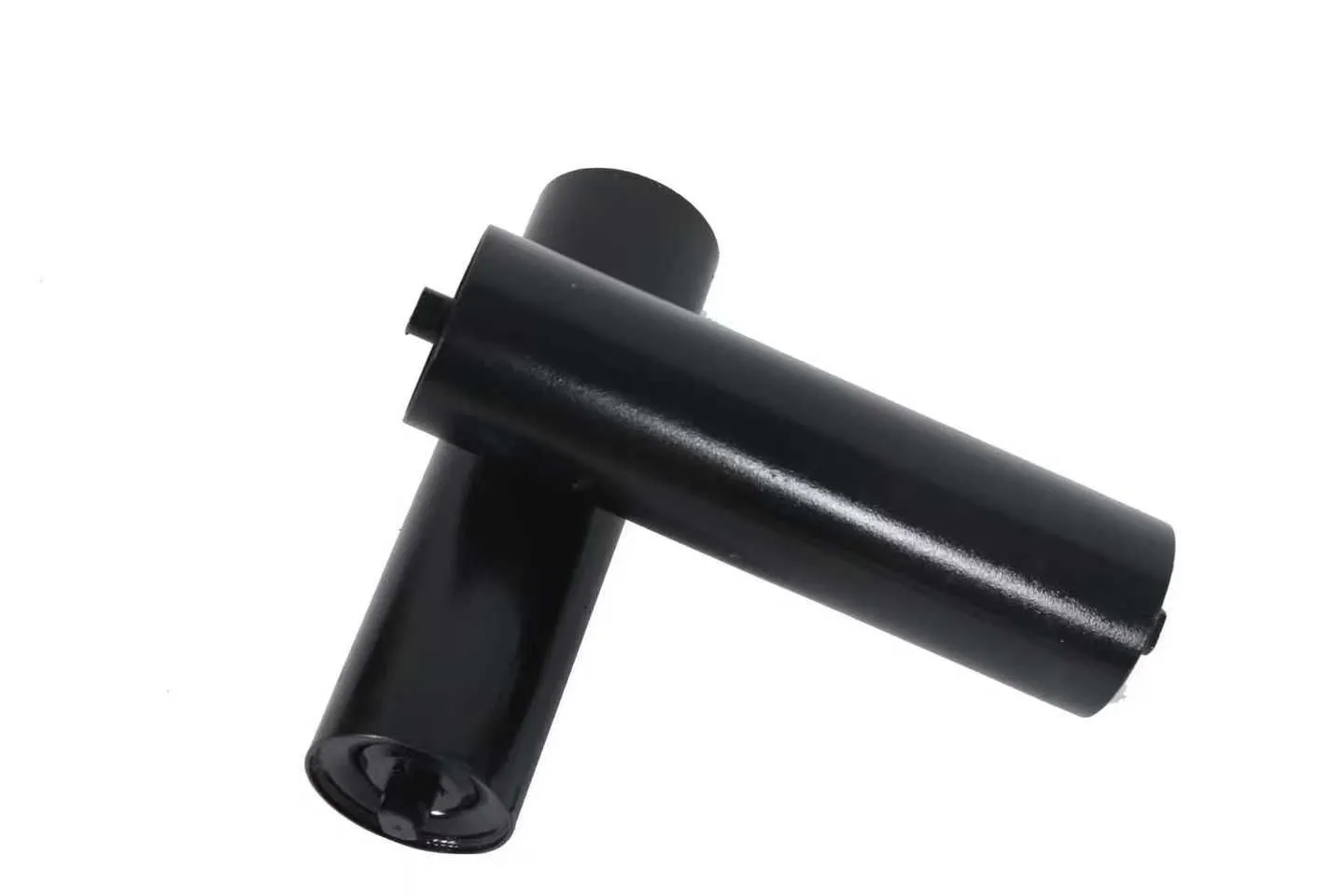
Return Rollers
Return rollers support the empty belt on its way back, typically as single flat rolls. Rubber-disc versions are available for sticky or wet material that would otherwise build up on the roller surface and cause belt wander.
Key Features
- Low rotational resistance and runout for stable belt tracking
- Multi-stage sealing against dust and water for long service life
- Balanced tubes for low noise at high belt speeds
- Interchangeable with major OEM frames and dimensions
- Custom sizes and configurations manufactured to drawings
Applications
Rollers are consumed continuously on every belt conveyor in quarrying, mining, cement, ports and recycling plants. Typical positions:
- Carrying side — troughing sets under the loaded belt
- Loading points — impact rollers under hoppers and transfer chutes
- Return side — flat or disc return rollers under the empty belt
- Belt edges — guide rollers keeping the belt centred
Selection Guide
Aggregates Processing
Request a Quote
Get a fast quotation
Please provide the following information for a faster quotation. Our team typically replies within one business day.